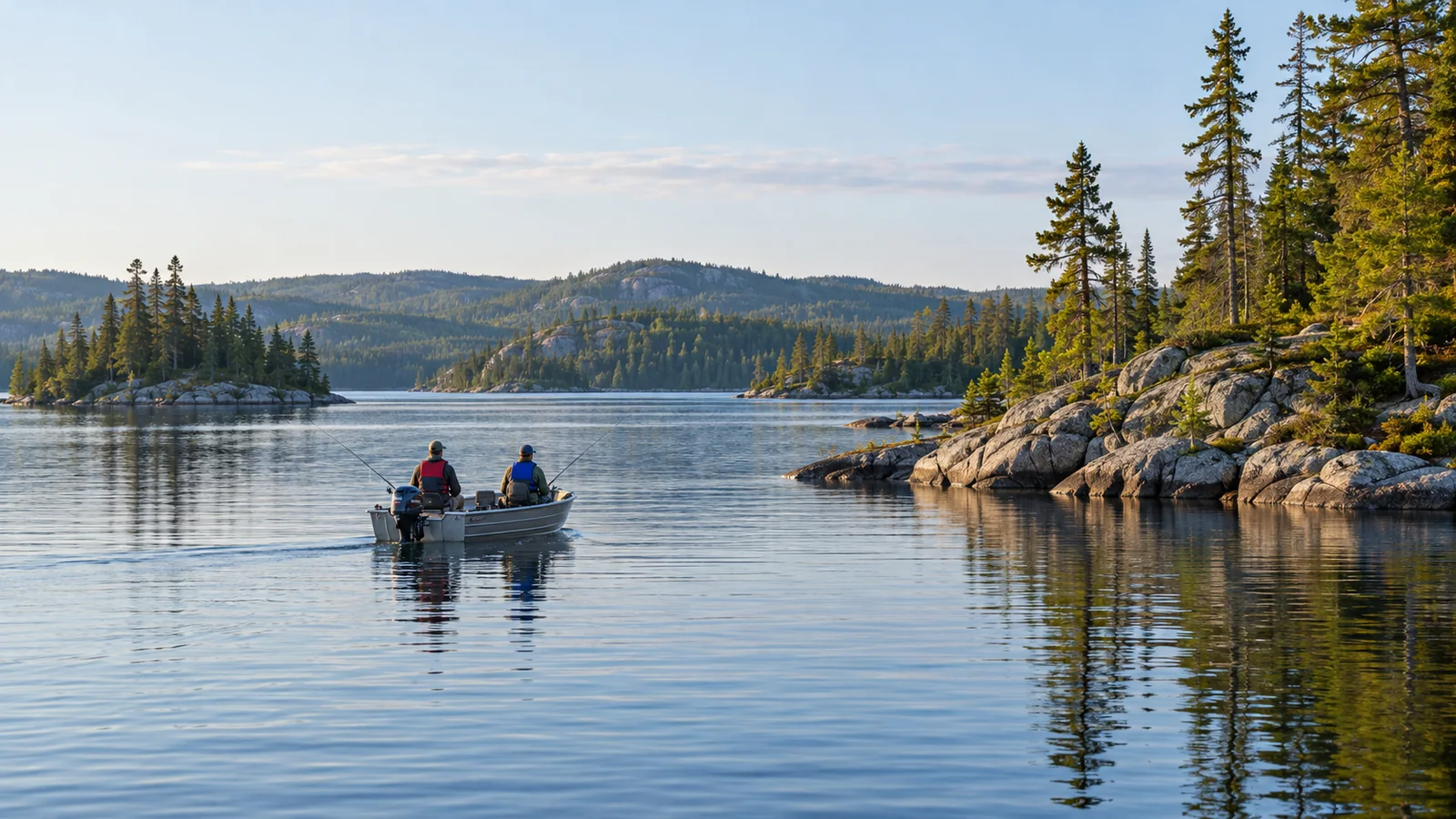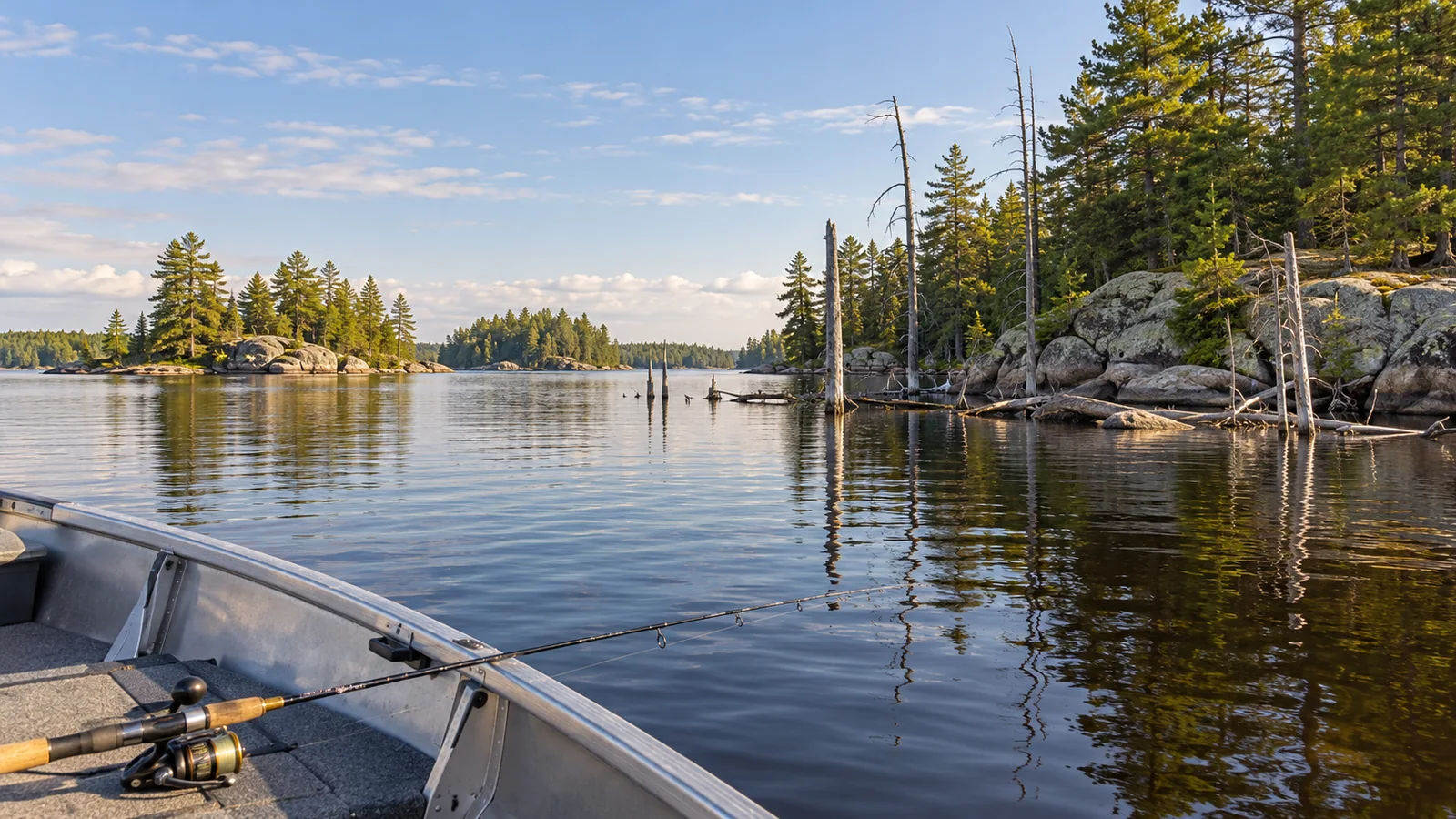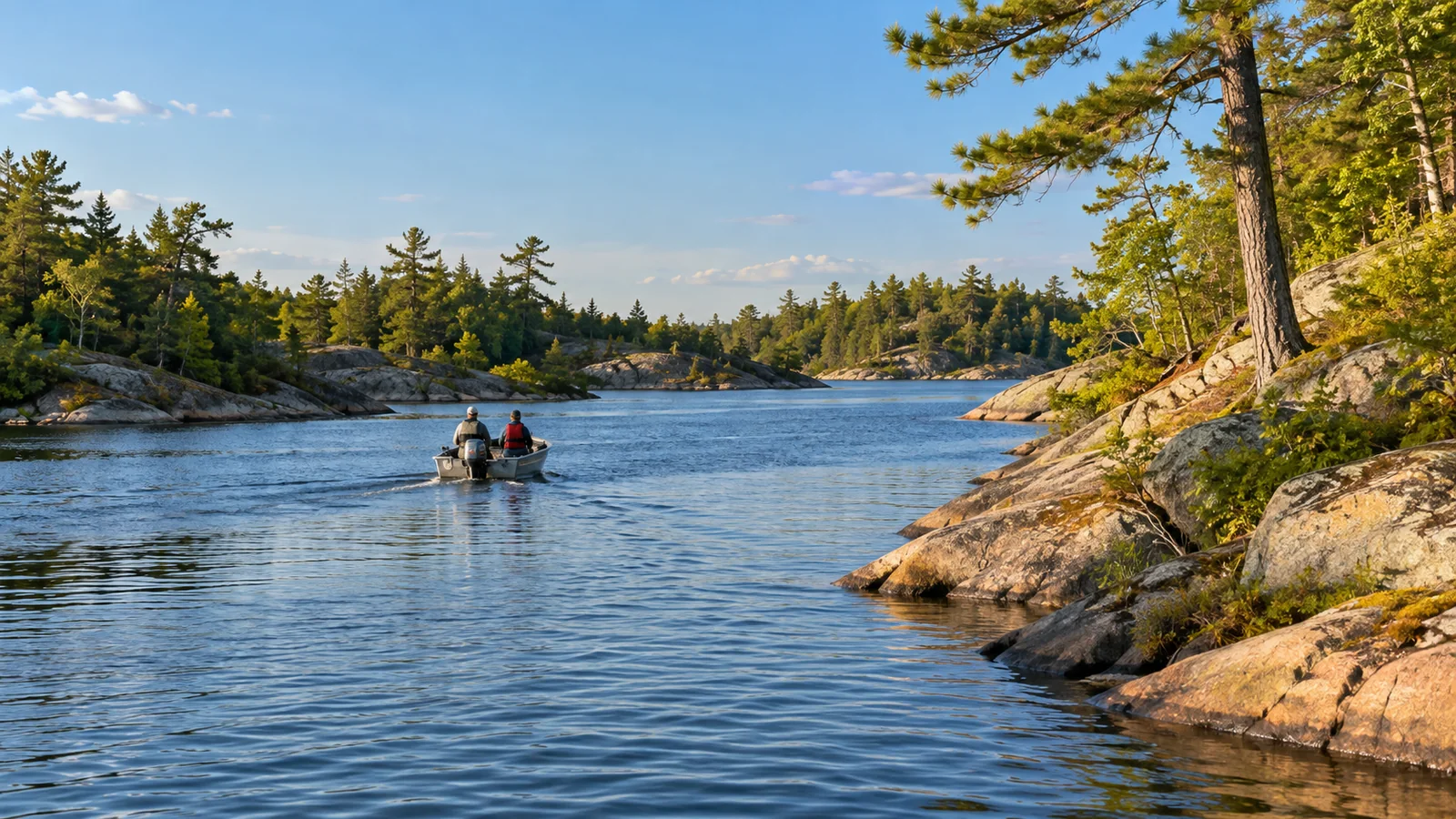
Fishing the French River gives you several kinds of water in one trip. You can work a rocky point for bass, follow a channel edge for walleye or cast into a bay for pike. Muskie add another draw for anglers willing to put in the time. The setting is part of the appeal, too: low granite shores, pine-covered islands and river bends that make you want to see what is around the next corner.
The river flows from Lake Nipissing to Georgian Bay through a network of channels and connected waters. It is a large system, so choosing your base matters. Pick a lodge for the section you want to fish, then learn the nearby routes and fishing areas.
Choose a section of river before booking
A French River address does not mean every lodge puts you on the same water. Wolseley Bay, other inland sections and the lower river each give a trip a different starting point. Look closely at the lodge map and ask which bays and channels you can reach from its dock.
Also ask where rapids or other barriers limit travel. You should not assume you can take a motorboat from one end of the river to the other. For a first visit, a smaller area with good local advice is a sensible choice. Compare the fishing, cabin and boat setup together. Our fishing regions page can help place the French River within a wider Ontario trip.
Make room for more than one species
Walleye, smallmouth bass, largemouth bass, northern pike and muskie give French River anglers several choices. The water near your lodge and the time of year will help decide which fish should lead the plan. A group can split its time between species, but it helps to agree on a main goal before heading out.
If one person wants muskie and another wants steady bass fishing, discuss boat time and tackle in advance. A family trip may work best with shorter outings close to camp. A fishing-focused group may prefer longer days and a guide. Both can fit the French River, provided the stay is chosen around the people coming along.
Work the structure with a purpose
Rocky points, island edges, weeds and nearby deeper water are useful things to look for when reading a fishing area. A spot where several of those meet can be worth a careful pass. Start with a clear plan for the fish you are after, rather than casting at every stretch of shoreline.
For walleye, ask locally about jigging or other methods suited to the current depth and flow. Bass anglers can bring a range of soft plastics and casting lures for rock and weed cover. Pike call for suitable leaders and handling tools. Our smallmouth bass guide and walleye guide offer more trip ideas before you pack.
Keep a muskie day separate from a mixed-species day
Muskie fishing can demand patience. If that is your goal, bring the rod, reel, line, leaders and lures needed for it rather than relying on a light walleye outfit. Have a large landing net, long pliers and release tools ready before the first cast. Think through how everyone in the boat will help when a fish is landed.
A guide can be a useful choice if you are new to muskie or to this part of the river. Ask whether the guide supplies tackle and how the day is run. You can still enjoy bass or pike fishing on other outings, but setting aside a dedicated muskie day gives that goal the time and attention it needs.
Pick your dates for the whole holiday
Season dates, weather and the kind of stay you want all belong in the same decision. An early trip may suit anglers who like cooler days and are ready to follow changing conditions. Summer can work well for groups mixing fishing with time at the cabin. Fall brings shorter days and a need for warmer clothing.
Ask about the species available during your dates and what the nearby water is usually like. Avoid a promise built around one trophy photo from a different month. If children or less keen anglers are coming, check the shore activities as carefully as the fishing package. Our family trip guide has ideas for keeping the week enjoyable for everyone.
Use local knowledge for river travel
Channels, shoals, currents and rapids deserve care, even if you have years of boating experience elsewhere. Ask the lodge to show you safe routes, areas to avoid and where to turn back. Keep a map handy and note the way home before you follow another channel into unfamiliar water.
Wear a life jacket, check the weather and leave your route with someone at camp. Keep enough fuel for the return and choose a turnaround time that allows for a slower ride. A first-day guide can help with travel as well as fishing. Learning a handful of nearby routes gives you more confidence than trying to cover the whole system in a single outing.
Plan a cabin stay that suits the group
Compare housekeeping stays with meal-plan options where offered. Ask what the boat package includes, whether guides are available and what happens when the weather keeps you ashore. If you bring your own boat, check launch access, dock space and any charging needs before arrival.
Use the current Ontario fishing rules for your exact fishing area and species, including local exceptions. Get licence questions settled before the drive. Pack for rain as well as sunshine, and bring dry storage for phones and spare clothing. With the cabin and travel details settled, the French River can offer a week of fishing without a rushed daily schedule.
Sources and useful links
A French River lodge worth a look
For a stay in the Wolseley Bay area, give Wolseley Lodge a look. This drive-in fishing and family lodge offers cabins on the riverfront or overlooking the bay, along with fishing packages, boat options and guides. It is a useful starting point for a trip built around walleye, bass, pike or muskie. Visit wolseleylodge.com to compare stays and ask about the dates and fishing plans that suit your group.