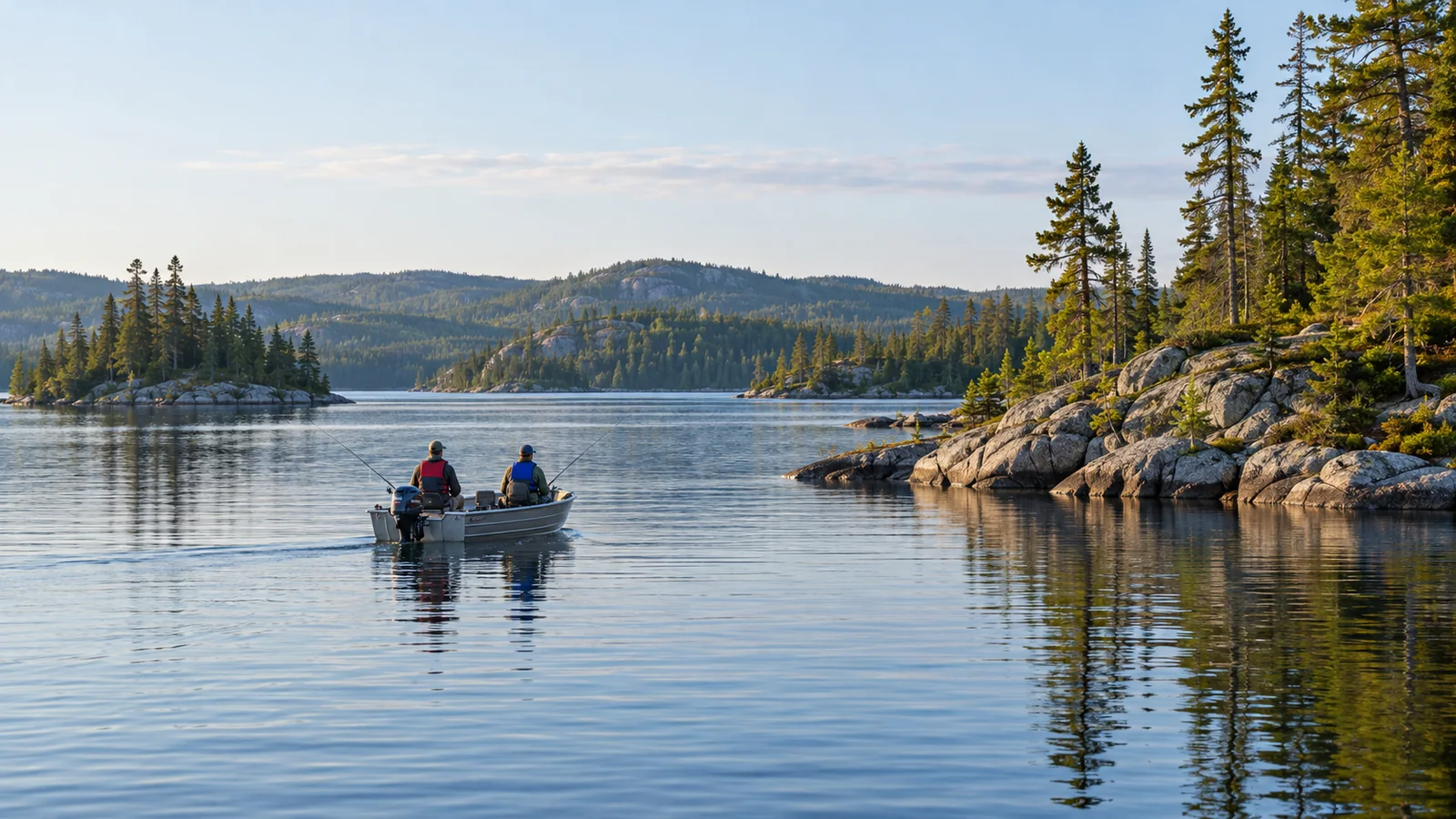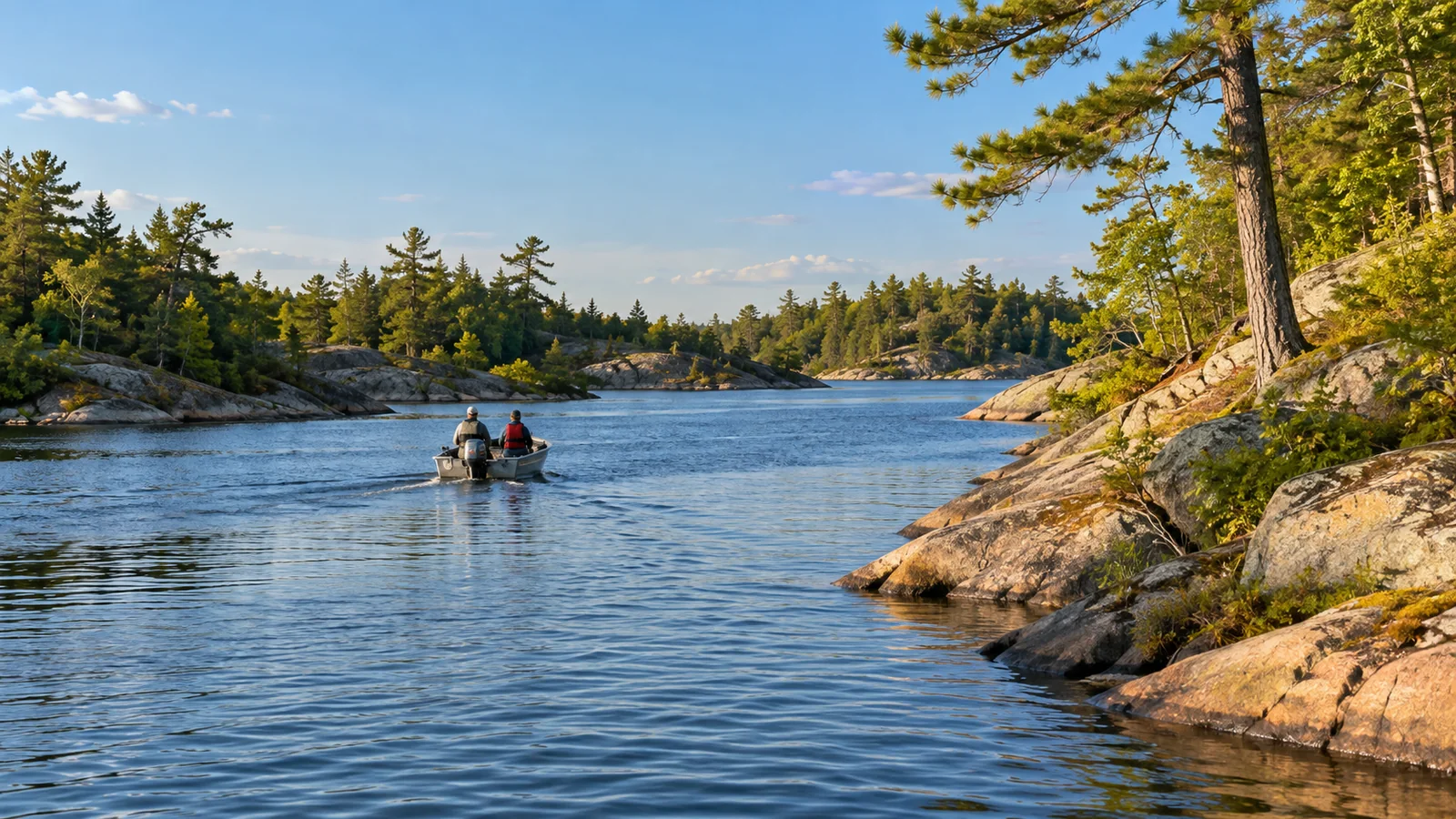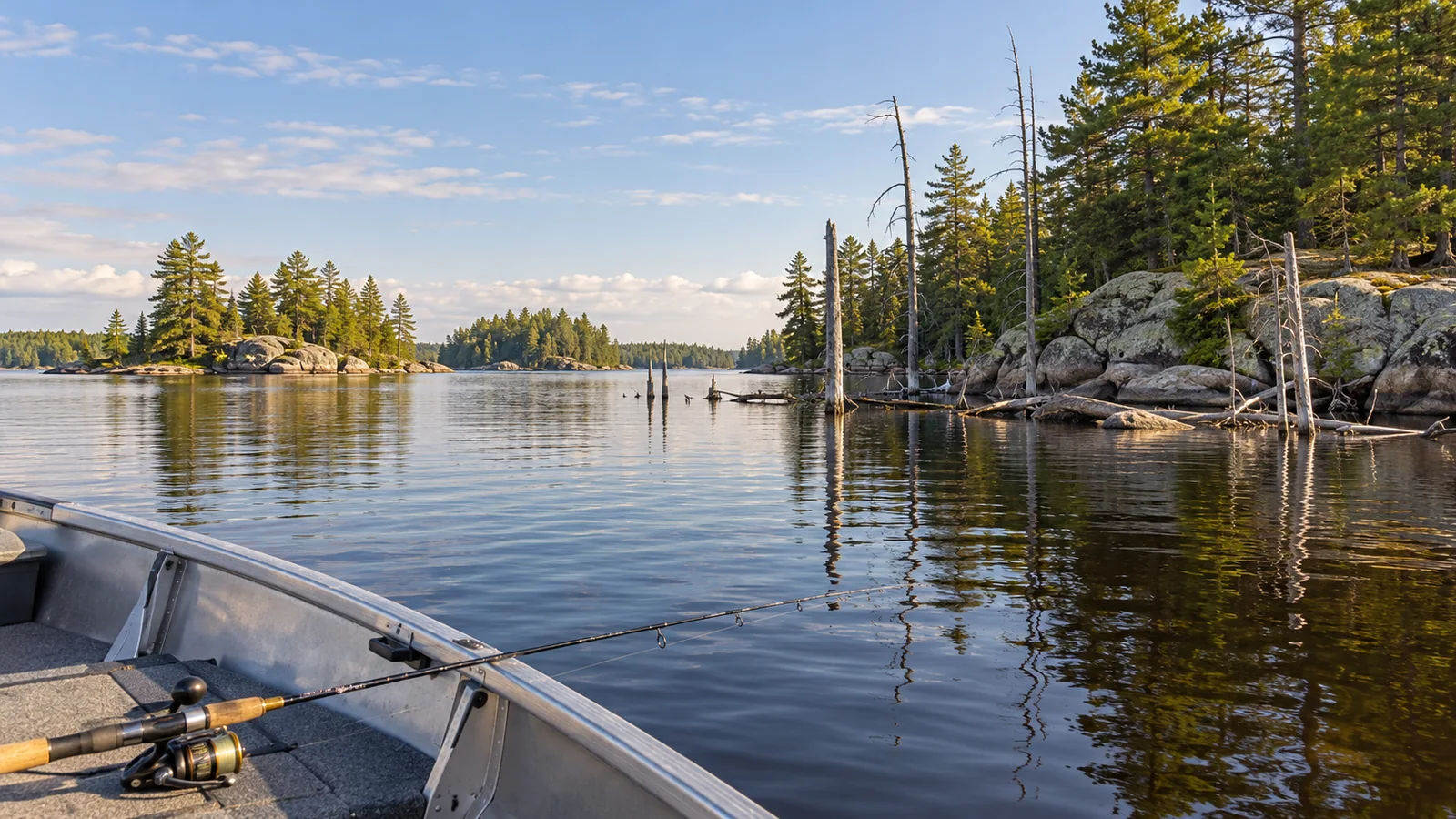
Lac Seul belongs on the shortlist for anglers planning a Northwestern Ontario walleye trip. Its broad water, islands, bays and channels give you plenty of places to fish, but its size also makes a good plan worthwhile. Choose the right base, ask for local help and spend your time learning a section of the lake rather than trying to cover it all.
The lake runs between the Ear Falls area in the west and the Sioux Lookout and Hudson area in the east. Where you stay matters. Your dock, the water nearby and the routes you can safely travel will shape the fishing day far more than a list of spots at the opposite end of the lake.
Why walleye get so much attention here
Lac Seul is known for walleye, and the lake gives anglers a mix of rocky shoals, shoreline points, islands and changes in depth to work. Tea-coloured water is another part of its character. Walleye fishing here does not have to be limited to the first or last minutes of daylight.
That does not mean every bay will produce fish every day. Wind, temperature, bait and boat position still matter. Begin with a few areas suggested by the lodge, make careful passes and note where bites happen. If you are new to this kind of fishing, our Ontario walleye guide is a useful place to get the basics before arrival.
A simple walleye approach is a good starting point
A jig tipped with a minnow, where permitted, or a soft plastic is a common starting choice. Carry enough jig weights to stay in touch with your lure under different depths and wind conditions. The goal is control: you want to know where the jig is, rather than drag it blindly behind a fast-moving boat.
Use your map and depth finder to follow a point or bottom change. When you get a bite, note the depth and make another pass. If you miss fish, try a slower pace before changing every lure in the box. Ask the dock staff about bait availability and suitable tackle for your week. Their recent local advice is more useful than an old story about one magic colour.
Plan for the week you are actually visiting
An early-season trip and a midsummer holiday need different plans. Water temperatures and fish locations change, so avoid building the whole week around a spot that worked for a friend months earlier. In summer, deeper structure can be worth attention; in other conditions, shorelines and nearby shallows may be part of the day's search.
Ask the lodge what anglers usually target during your dates and how far they normally travel. Pack clothing for cool mornings even if the trip is in July. A fall visit needs warmer layers and an earlier return plan as daylight gets shorter. Keep a little room in the schedule for windy days, and check the current season dates before choosing which species to target.
There is more here than walleye
Northern pike provide another reason to bring a casting outfit. Yellow perch and smallmouth bass also occur in Lac Seul, and muskie are part of the lake's fishery, with the eastern area receiving much of that attention. These choices vary by location, so ask about the water near your lodge.
If pike are on your list, bring tackle and leaders suited to their teeth, along with long pliers and a proper landing net. If your main goal is muskie, say so before booking. A walleye-focused stay may be a different trip from a dedicated muskie outing. Trying to cover every species can spread your time thin. Choose one main goal and keep the others as options.
Treat the lake's size as part of the booking decision
Open water, rocky shoals and changing wind all deserve respect on Lac Seul. A calm departure does not promise a calm ride home. Ask for safe routes, known hazards and sheltered choices before leaving the dock. Save those routes where you can reach them, and carry a paper map as a backup.
For a first visit, consider booking a guide early in the stay. You can learn how to move around your section of the lake and which areas suit the day's conditions. Ask about fuel, communication, emergency contacts and the operator's weather advice. A shorter outing on familiar water can be a better day than a long crossing that leaves everyone watching the sky.
Compare what the fishing package includes
Before paying a deposit, ask about the cabin, boat, motor, fuel, bait and guide options. If you bring your own boat, confirm the launch, dock space and where you can get fuel. If you use a lodge boat, check the equipment included and whether you need to bring your own life jacket.
For housekeeping stays, plan a few easy meals and keep lunch simple enough to carry in the boat. Ask about groceries before arrival so the first evening is relaxed. Groups should agree on fishing hours, meal jobs and shared costs before the drive. These small choices help the holiday run smoothly and keep the fishing day from becoming a debate over breakfast.
Get the rule check and packing done at home
Read the current Ontario fishing rules, including the entries and exceptions for Lac Seul. Confirm your licence needs, catch and possession limits, size rules and bait restrictions for the trip. A lodge may also have its own release policy, so ask about that while booking.
Pack rain gear, sun protection, spare line, pliers, a dry bag and a charged phone, while allowing for weak service. Our trip-planning page can help with the wider checklist. With the basics ready, you can arrive thinking about where to fish rather than where you left your rain jacket. Keep your first day's plan short enough to learn the boat and get comfortable on the water.
Sources and useful links
A place to stay for your Lac Seul trip
Give Lac Seul Evergreen Lodge a look when planning a stay near Ear Falls. The lodge offers furnished cabins and fishing on Lac Seul, with boats, local fishing advice and guide options described on its website. That local help can be useful for a first visit to such a large lake. Visit lacseulwalleye.com to see the cabins and packages, then ask about dates and the fishing you want to do.