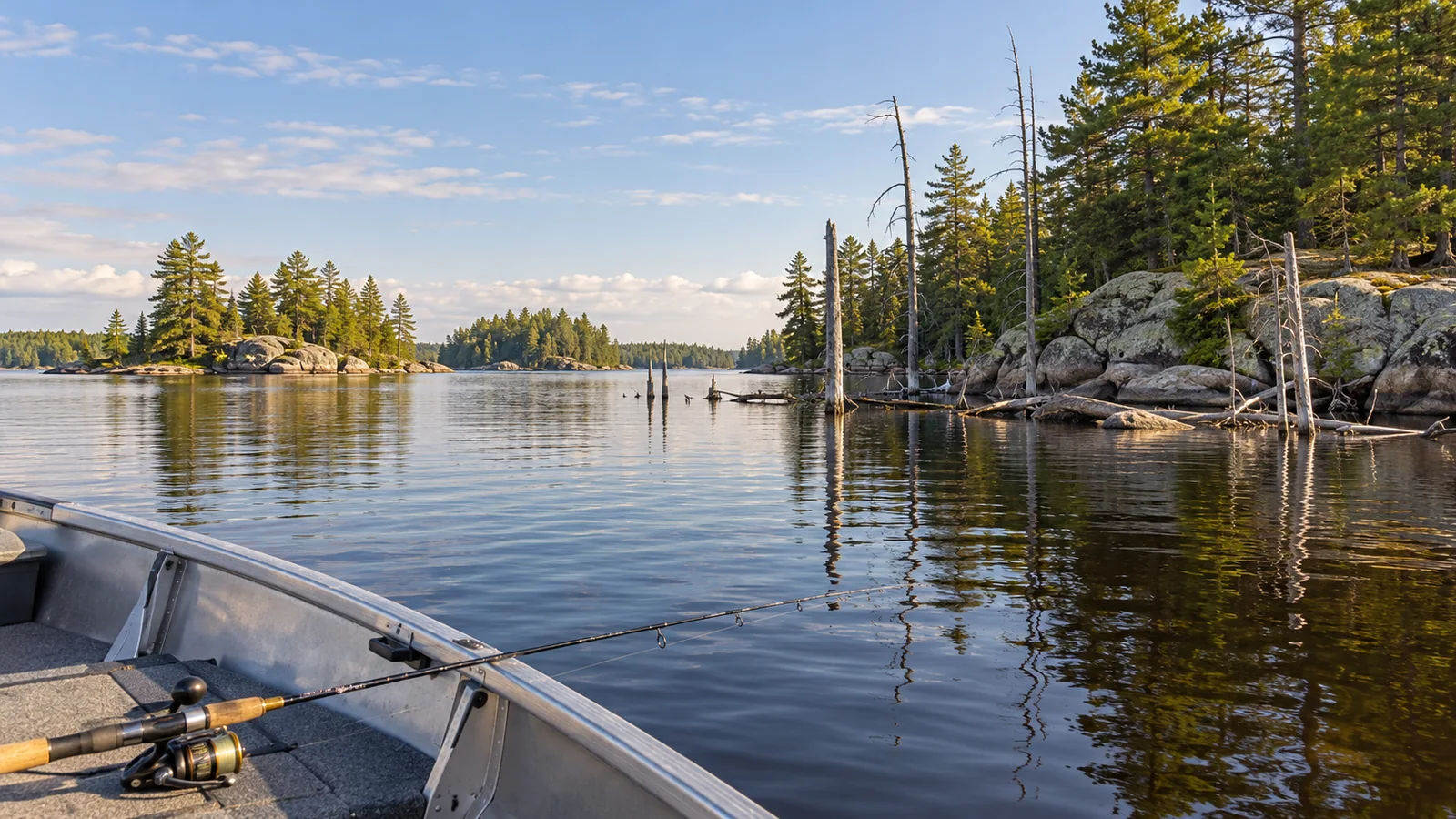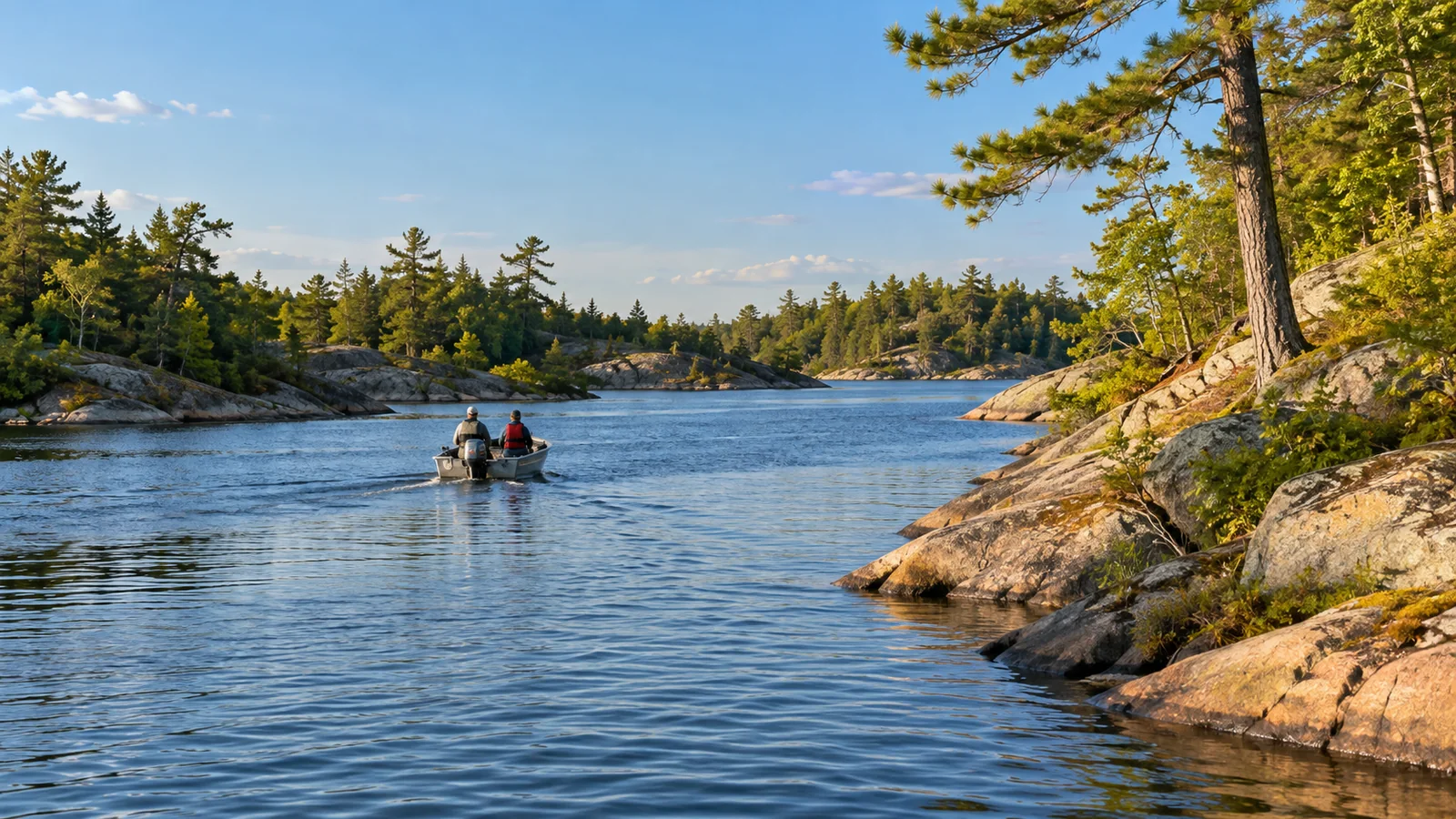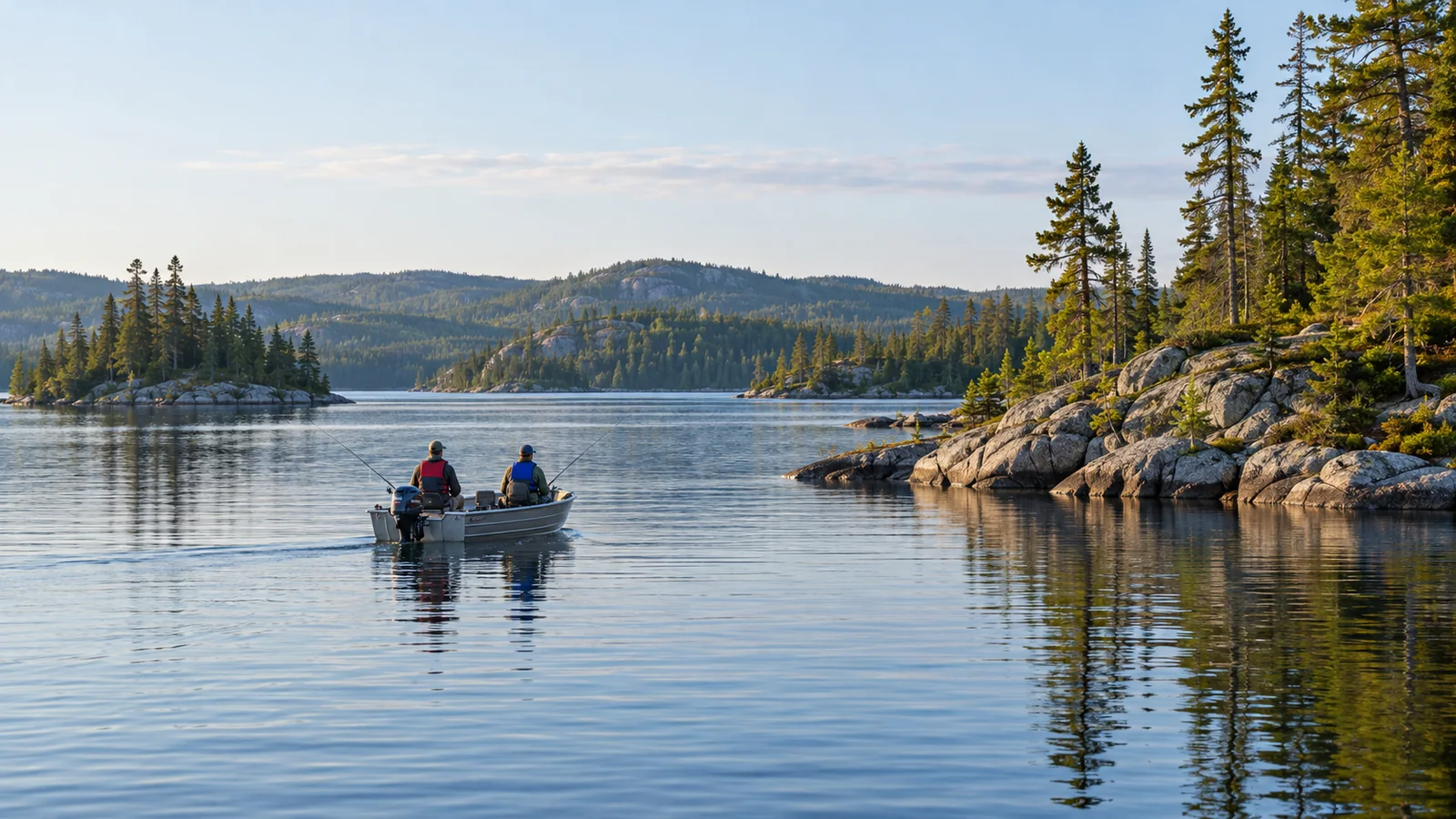
A fishing trip to Northwestern Ontario can mean a week chasing walleye from a lakeside cabin, a day casting for smallmouth bass around rocky islands, or a flight to an outpost where the boat is waiting at the dock. The choices are wide, but the best place to begin is simple: decide what you want to catch and how you want to spend your time.
Kenora, Minaki, Dryden, Ear Falls, Sioux Lookout and Red Lake are useful starting points when comparing trips. Each gives you a different set of waters and places to stay. Rather than booking the first cabin with a nice view, work back from the fishing and the daily routine your group wants.
Choose the fish before you choose the cabin
Walleye, northern pike, smallmouth bass, muskie and lake trout all have a place in Northwestern Ontario fishing. They do not share every lake, though, and a lodge that suits a walleye group may be a poor fit for someone whose whole trip is built around lake trout.
Ask which species guests target on the lodge's home water and whether you will need a boat ride, road trip or portage to reach other lakes. If you want variety, look for a connected system with several species. If everyone is keen on one fish, put that fishery first. Our walleye trip guide and northern pike guide can help you narrow the choice.
Look at the region one waterway at a time
Lake of the Woods offers a large island-filled setting and several fishing species. Nearby Minaki gives anglers access to the Winnipeg River system. Farther east, the Dryden and Vermilion Bay areas bring Wabigoon and Eagle Lake into the trip search. Ear Falls and Sioux Lookout are useful names to know when looking at Lac Seul.
These are starting points, rather than a list to squeeze into one holiday. Pick a home base and learn its nearby water. A week spent getting to know a few points, bays and travel routes is often more satisfying than changing lakes every morning. Ask the lodge what a normal day looks like from its dock.
Drive in, boat in or fly in?
A drive-in fishing lodge suits groups that want to bring their own boat, carry extra gear or fit fishing around other plans. Road access also makes groceries and arrival times easier to manage. Still, check the final road, launch arrangements and parking before towing a boat north.
A boat-in stay adds another travel step, so ask about pickup times and baggage. A fly-in outpost can suit a group looking for a more remote stay, but it needs careful packing. Ask about baggage limits, food, fuel, power, drinking water and contact with the operator. The right choice is the one that works for everyone in your group, not simply the farthest point on the map.
Give the season a place in your plans
Spring, summer and fall offer different fishing and travel conditions. Early trips can mean cool mornings and changing water temperatures. Summer brings longer days and more room for family activities. Fall can suit anglers who like a quieter cabin stay and are ready for colder weather.
Fish locations also change. Pike may use shallow bays early in the season and different depths as the water warms. Walleye anglers often work points, humps and other bottom changes. Ask the operator what has been working during your intended week, rather than relying on last year's dates. Check open seasons for each fish before you book, and keep a spare day or two in mind if your schedule allows.
Keep your tackle useful and manageable
You do not need to bring every lure you own. Begin with the fish you plan to target. For walleye, a spinning outfit, a range of jig weights and soft plastics can provide a sensible base. Add suitable leaders and casting lures if pike are part of the plan. Muskie fishing calls for heavier tackle and the right landing and release tools.
Ask what bait is available locally before buying or moving live bait. Bring spare line, pliers, a landing net suited to your fish and a way to keep tackle dry. A short gear check before leaving home is time well spent. It is much easier to replace a worn reel handle in town than at a remote dock.
Book the daily routine, too
Fishing packages can differ even when two cabins look similar online. Find out whether the stay includes a boat, motor, fuel, bait or meals. For a housekeeping trip, ask about cooking equipment and food storage. If the group wants an early breakfast and supper ready after fishing, compare meal-plan stays.
A guide for the first day can be a useful option on unfamiliar water. Ask about that cost when booking. Families should also check what is available when someone wants a break from fishing. A beach, a comfortable cabin or an easy shore activity may matter as much as another tackle box. Our family fishing trip page has more planning ideas.
Leave room for weather and the next visit
Before heading out, get a local weather report and ask about safe routes and sheltered water. Keep fuel for the return trip, wear a life jacket and tell someone your plan. Carry a map as well as your electronics. Large lakes and connected channels deserve attention even when the morning begins calm.
Use the current Ontario fishing rules for the exact water you will fish, including local exceptions. Plan meals around fish you may lawfully keep, handle released fish with care and leave your shore-lunch stop clean. The reward is a trip you can enjoy again, with a few familiar spots to return to next time.
Sources and useful links
A Northwestern Ontario lodge to keep in mind
For a Minaki fishing trip, give Big North Lodge & Outposts a look. Its main lodge and cottages sit on Gun Lake on the Winnipeg River system near Kenora, with walleye, northern pike, smallmouth bass and muskie among the fishing choices. It also offers Roger Lake and Long Lake fly-in outposts. Visit bignorthlodge.com to compare the stays and ask about dates for your next Northwestern Ontario fishing trip.